our very first badminton clinic, it was successful with 11 participants --
it was full of fun and learning with Coach Jeff
These are the common Badminton Terms used in Badminton.
Attacking clear : An offensive stroke hit deep into the opponent's court.
Backcourt : Back third of the court, in the area of the back boundary lines.
Backhand : The stroke used to return balls hit to the left of a right-handed player and to the right of a left-handed player.
Base position : The location in the centre of the court to which a singles player tries to return after each shot; also called "centre position".
Baseline : The back boundary line at each end of the court, parallel to the net.
Carry : An illegal stroke in which the shuttle is not hit, but caught and held on the racket before being released; also called a "sling" or "throw".
Centre line : A line perpendicular to the net that separates the left and right service courts.
Clear : A shot hit deep into the opponent's court.
Doubles : A game where a team of two players play against another team of two.
Doubles sideline : The side boundary of a doubles court.
Drive : A fast and low shot that makes a horizontal flight over the net.
Drop shot : A shot hit softly and with finesse to fall rapidly and close to the net in the opponent's court.
Fault : A violation of the playing rules.
Feint : Any deceptive movement that disconcerts an opponent before or during the serve; also called a "balk".
Flick : A quick wrist-and-forearm rotation used to surprise an opponent by changing an apparently soft shot into a faster passing shot.
Forecourt : The front third of the court, between the net and the short service line.
Forehand : The stroke used to return a ball hit to the right of a right-handed player and to the left of a left-handed player.
Game : The part of a set completed when one player or side has scored enough points to win a single contest.
Hairpin net shot : A shot made from below and very close to the net and causing the shuttle to rise, just clear the net, then drop sharply down the other side so that the flight of the shuttlecock resembles the shape of a hairpin.
Halfcourt shot : A shot hit low and to midcourt, used effectively in doubles play against the up-and-back formation.
High clear : A defensive shot hit deep into the opponent's court.
Kill : Fast downward shot that cannot be returned.
Let : A minor violation of the rules allowing a rally to be replayed.
Long Service Line : In singles, the back boundary line. In doubles a line 2-1/2 feet inside the back boundary line. The serve may not go past this line.
Match : A series of games to determine a winner.
Midcourt : The middle third of the court, halfway between the net and the back boundary line.
Net shot : A shot hit from the forecourt that just clears the net and drops sharply.
Passing shot : A shot which passes the opposing player or team.
Push shot : A gentle shot played by pushing the shuttlecock with a little wrist motion.
Rally : The exchange of shots that decides each point.
Serve : The stroke used to put the shuttlecock into play at the start of each rally; also called a "service".
Service court : The area into which a service must be delivered. Different for singles and doubles.
Set : To choose to extend a game beyond its normal ending score if the score is tied with one point to go.
Short service line : The front line of the service courts 1.98 metres from the net. Singles : A game where one player plays against another player.
Singles sideline : The side boundary of a singles court.
Smash : A hard-hit overhead shot that forces the shuttle sharply downwards into the opponent's court.
Wood shot : A legal shot in which the shuttle hits the frame of the racket.
Always remind yourself not to cheaply lose points because of bad service, especially now with the new scoring system. Be familiar with the Badminton Service Rules as well.
Basically there are four types of serve.
Use this badminton serve during singles play to move your opponent as far back in court as possible, thus opening up his court. Be more cautious if you use this serve during doubles. Opponents with strong attacking abilities will work this serve to your disadvantage.

Use this badminton serve when you want your opponent to lift the shuttle. It is commonly used during doubles, but you can use it during singles too if your opponent's attack is too strong. You can use either forehand or backhand to play this serve.
Forehand
Backhand

Use this badminton serve when you are under pressure from a rushing opponent. It is a rather useful tool during doubles. However, you might be left exposed if your opponent anticipated it. So, use it sparingly and keep your opponent guessing.
You can use either your forehand or backhand to perform this serve. Give the impression that you are going to push the shuttle as in the low serve, but instead use your wrist to flick the shuttle over. Wrist action is the key to executing this serve well.

Use this badminton serve to add some variation to your serving game. This is considered an attacking serve and can be used in singles and doubles. The shuttle will travel at a flatter angle pass the net with pace.
It may win you points outright or force a poor service return if your opponent is unprepared. However, make sure you contact the shuttle below your waist and not make a service fault.

Holding the racket wrongly will decrease your stroke's power and accuracy.Your shots will be limited and therefore you will not enjoy the game as much let alone improve.
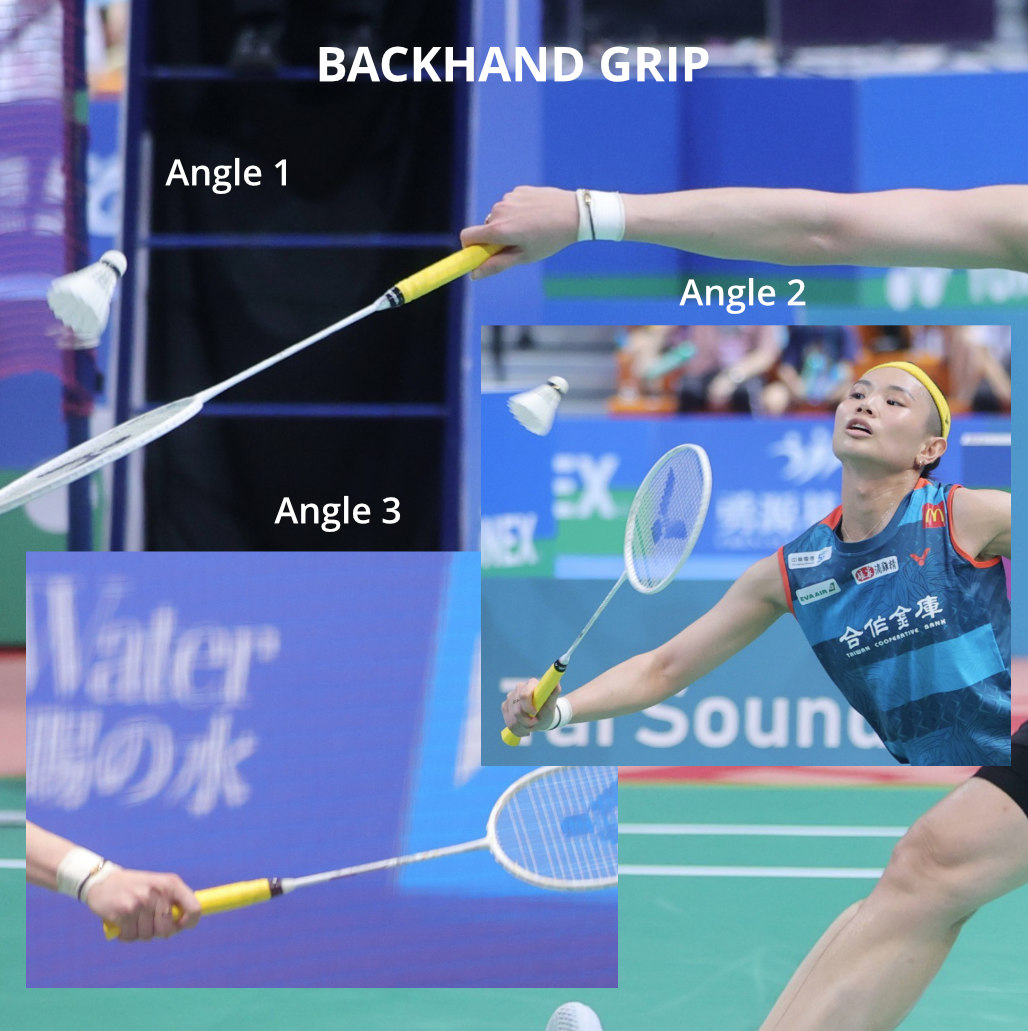
You will need to learn how to change grip quickly during games. Below are the two basic types of Badminton Grips.
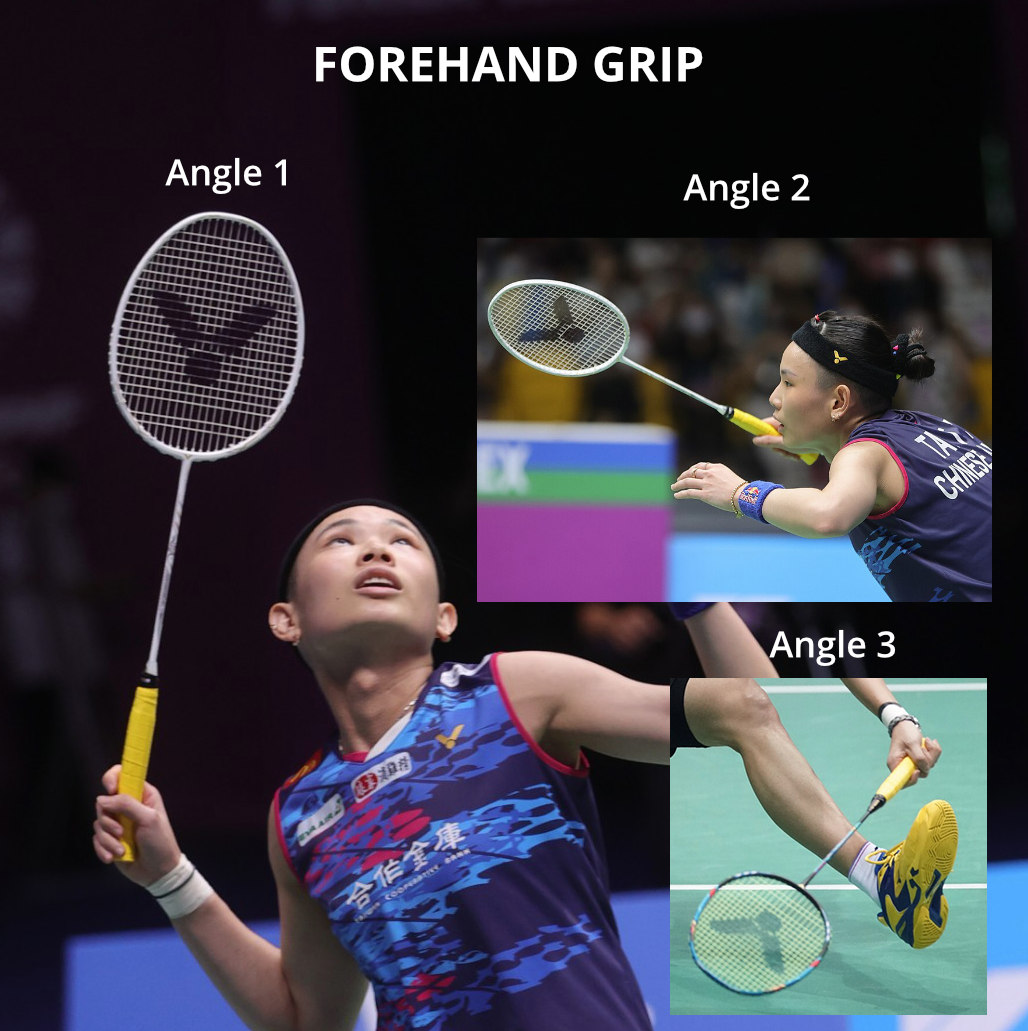
Backhand Grip